For Russian-speaking Slavic communities in Sacramento, harassment, bias and hate are everyday realities.
But hate in this diaspora is not a simple story of outside hostility; it is shaped by migration, religion, politics and ongoing geopolitical conflict, and it cuts in both directions — from discrimination experienced by Slavic people from others in American society, to bias inflicted within the community itself.
Understanding these dynamics means grappling with a deep institutional distrust that runs through much of the Slavic immigrant community and limits their access to the educational resources, legal support and state-level services that exist to help them.
LGBTQ+ people in Slavic communities
Most former Soviet countries maintain conservative social codes under which LGBTQ+ identities are not legally or socially tolerated. In several of these countries like Russia, Belarus, Turkmenistan and Uzbekistan, being openly gay can result in prosecution or physical danger. This drives some migration — but arriving in California does not mean arriving safely.

California has the largest Russian-American population in the U.S., with over 332,000 residents as of 2025.
Sacramento has historically drawn large numbers of religious refugees from the former Soviet Union, many of whom hold conservative Christian values that are openly hostile to LGBTQ+ identities. This Slavic Christian sub-community has a well-documented history of opposing LGBTQ+ rights and sex education in schools, and stigmatizing of non-heterosexual identities within family and community networks.
In this environment, Slavic LGBTQ+ individuals tend to keep a low profile. Many do not come out for fear of being ostracized along with their families. Others relocate to San Francisco or Los Angeles, where they can access support from peers and local organizations at greater distance from their home communities.
In one telling detail, a representative of the Sacramento LGBT Community Center said that while Russian-speaking LGBTQ+ people do reach out to the organization, they do so less frequently than other immigrant groups — and often conceal their country of origin and avoid speaking Russian, so the broader Slavic community cannot identify them.
“The Russian-speaking LGBTQ population in California is statistically invisible but socially significant, likely numbering in the tens of thousands but largely underrepresented in official data,” the representative said.
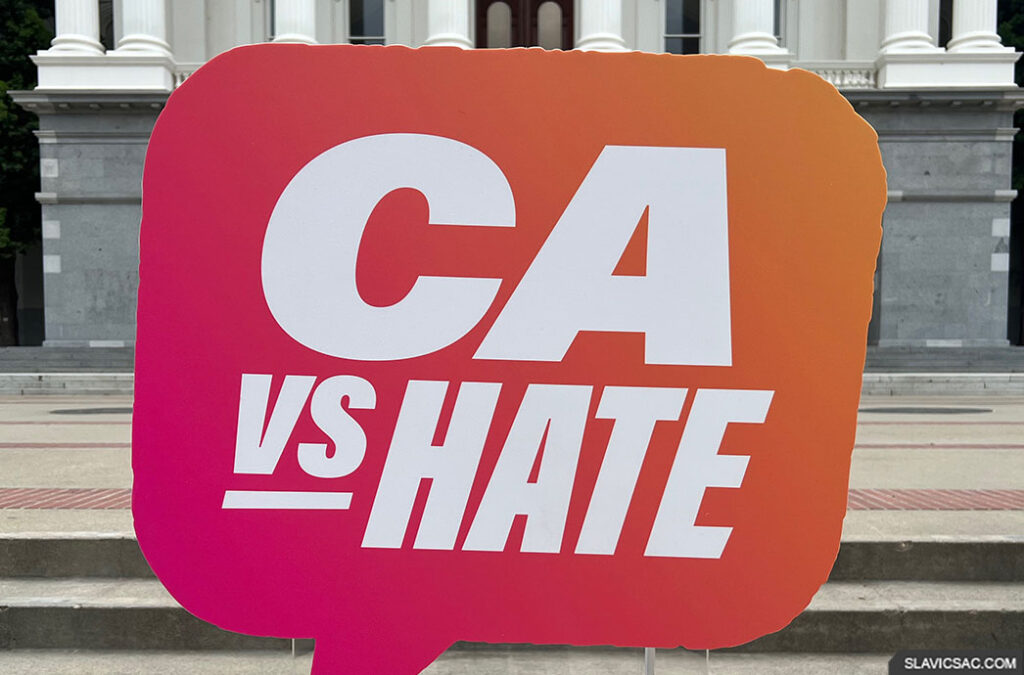
Russian-speaking LGBTQ+ individuals are aware of and use resources like the statewide hate incident and crime reporting hotline California vs Hate, but barriers remain.
Jorge Reyes Salinas, communications director for Equality California — the largest statewide LGBTQ+ civil rights organization — said that when Russian-speaking LGBTQ+ people contact his organization, their primary concerns are health and well-being, but language barriers mean that outreach and connection to partners like remains difficult, and a low volume of requests may reflect “fear of rejection” by other Slavic community members rather than low need.
Meanwhile, Russian-language Facebook groups serve as an informal and often fraught alternative. LGBTQ+ people post anonymously seeking therapy referrals, psychological support, housing with “safe people” or information about community events, but these posts frequently draw conservative backlash — a dynamic illustrating why formal reporting channels remain so underused.
The result is that many people are double marginalized, being stigmatized within their own ethnic community while also navigating the broader challenges facing immigrants in American society.
Anti-immigrant biases outside and inside the Slavic community
Outside hostility toward Russian-speaking and other Slavic immigrants includes stereotyping and discrimination based on language, ethnicity and perceived political affiliation. Russia’s 2022 invasion of Ukraine both sharpened these existing biases and triggered migration waves from both countries, complicating an already fraught landscape.
Within Sacramento’s Slavic community, there is also a parallel and largely unspoken internal prejudice between longer-established and newly arrived immigrants. Those who came more than 20 years ago often blame recent arrivals — regardless of country of origin — for entering the country without authorization, not working hard enough and drawing on public benefits. In Russian-language Facebook groups, requests for help with legal questions, food stamps, childcare or cash work reliably draw negative comments. As the community rarely recognizes these responses as hateful, they usually go unreported.
This has real consequences for access to resources. Cases of newly arrived immigrants — particularly undocumented ones — being underpaid or defrauded by people posing as tax advisors or immigration lawyers are not uncommon. Fear of authorities, limited English and lack of legal status prevent many from contacting services that exist to help them, including California vs Hate, which is anonymous, confidential and operates with no police or ICE involvement.

How California Prepares for Emergencies
Historical distrust of institutions, limited English and the absence of Russian-language representation within official support structures mean that community members continue to turn inward — to social media groups and informal networks — rather than to the agencies that could provide legally protected assistance.
But the current federal immigration climate deepens these barriers. U.S.-based Russian-language Facebook and other online groups are flooded with anonymous posts about Immigration and Customs Enforcement (ICE) detentions, denied asylum claims and family separations. Immigrants, knowing that social media may be monitored, are reluctant to post under their real names. Many describe depression and anxiety as they wait for outcomes they cannot predict.
A representative of The Coalition for Humane Immigrant Rights (CHIRLA), a prominent California-based nonprofit that advocates for the rights of immigrants and refugees, said over the phone that they generally do not receive requests from Russian speakers.
One possible reason is a lack of awareness of available resources, she explained, adding that language is another serious barrier, as they have more resources to provide relevant assistance to immigrants who can speak English than to those who can’t.
Russian-speaking victims are also largely invisible in official hate crime data. California Department of Justice hate crime reports do not track victims by language; Russian speakers are typically absorbed into “white” or “other ethnicity” categories.
A 2024 federal lawsuit filed by 276 Russian and former Soviet bloc nationals, Tereshchenko v. Mayorkas, alleges that ICE authorities violated these plaintiffs’ rights through improper detention, lack of due process and parole delays and denials based on national origin. The case remains pending in federal court.
A Ukrainian family against the system in California
One of the most legally charged cases to emerge from the Russian-speaking community in recent years reflects wider hate-prevention barriers within this community including difficulties with translation, unfamiliarity with legal rights and a fear of authorities that discourages engagement with any state institution — even one that could help.
In December 2025, Alexandra and Andriy Lyashchenko, Ukrainian immigrants, filed federal civil rights lawsuit against the Shasta County Health and Human Services Agency and several officials, after Child Protective Services removed their teenage daughter from their home in June 2024.
The family said the removal stemmed from their refusal to approve hormone therapy for their daughter, who had begun identifying as transgender. Among their allegations is a claim that county officials compounded the harm through culturally biased conduct — including, they say, forbidding their daughter from speaking Ukrainian in custody and referring to the family as Russian despite knowing they were Ukrainian — a distinction that carries significant weight given the ongoing war.
The parents’ names were placed on California’s Child Abuse Central Index (CACI) registry, despite no criminal charges.
The family’s teenage daughter had experienced significant mental health difficulties for years. In 2024, she was taken into protective custody after county authorities determined that the parents’ refusal to affirm her gender identity constituted emotional abuse. The Lyashchenkos contend the intervention was unjustified, based on cultural misinterpretation and procedural violations — and that authorities failed to properly assess their situation.
The parents alleged that Shasta County depreciated their Ukrainian nationality and cultural background and defined it as emotional abuse. They are seeking more than $20 million in compensatory and punitive damages, reimbursement of medical expenses, removal of their names from the CACI Registry and reimbursement of legal fees — which have reached $130,000 at the time of reporting.
“We are desperate,” said Alexandra in an interview with Slavic Sacramento, describing her two-year battle with local authorities. “Shasta authorities did not properly review our family situation, taking into account our immigrant and cultural background. Moreover, they treated it as a disadvantage. How is that possible?”
“This is clear bias at the local level,” she continued, adding that during this time, she and her husband have not seen their daughter and do not know what is happening to her.
Across these cases, the common thread is reluctance to report — whether due to language barriers, distrust of institutions, fear of exposure within tight-knit communities or uncertainty about what reporting would actually achieve.
California vs Hate was designed specifically to address those barriers: calls to its multilingual hotline, 833-8-NO-HATE, are anonymous and carry no obligation to involve police or immigration authorities. For communities that have reason to distrust official channels, that distinction matters. Hate and bias does not diminish when it goes undocumented; it becomes harder to address and easier to repeat.
Get support after hate
California vs Hate is a non-emergency, multilingual hotline and online portal offering confidential support for hate crimes and incidents. Victims and witnesses can get help anonymously by calling 833-8-NO-HATE (833-866-4283), Monday to Friday, 9 a.m.–6 p.m. PT, or online at any time. Anonymous. Confidential. No Police. No ICE.
This story was produced in collaboration with California vs Hate. Join them for the first-ever CA Civil Rights Summit on May 11, 2026. Register and find more information at www.cavshate.org/summit.
Elena Kuznetsova, SlavicSac.com