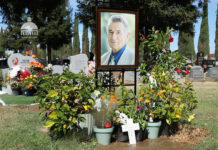
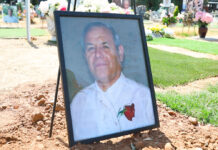
Former pastor of Bethany Slavic Missionary Church, Victor Miroshnichenko, who was sentenced to life in prison for child sexual abuse, has died in a California prison.
Former pastor of Bethany Slavic Missionary Church in Sacramento, California, 75-year-old Victor Miroshnichenko, who was serving a life sentence for sexually abusing his granddaughter, has died in prison. Slavic Sacramento confirmed his death through the California Department of Corrections and Rehabilitation.
According to state records, Miroshnichenko died on August 19 of this year at a prison in Solano County. The cause of death was cancer.
Official information indicates that in the final years of his life, the former Bethany pastor suffered from advanced prostate cancer and several other age-related illnesses.
As Slavic Sacramento learned from the Sacramento County Superior Court, which previously handed down a severe sentence against Miroshnichenko, the inmate filed a petition for compassionate release in July of this year, citing his medical condition. He submitted dozens of pages of medical records and statements from his treating physicians.
“Mr. Miroshnichenko is a 75-year-old patient residing in the prison hospice at the California Medical Facility in Vacaville, California. A panel of physicians from the California Department of Corrections and Rehabilitation has determined that Mr. Miroshnichenko’s condition is terminal,” the prison doctors’ assessment, filed with the court in June 2026, states.
According to the medical reports, Miroshnichenko was diagnosed with metastatic cancer of the stomach in 2010. Doctors also suspected a second cancer originating in the prostate, which had spread to his liver, bones, and several lymph nodes. Physicians estimated that he had no more than six months to live. On June 10, following consultations with his treating physician, he was transferred to the prison hospital.
“Mr. Miroshnichenko does not pose a threat to the public because of his medical condition,” the former Bethany Church pastor’s attorney told the court. “He has documented support from the local community. His case is not a matter of public interest. He could potentially be transferred to ICE custody.”
“He does not wish to undergo aggressive treatment for cancer or urinary tract obstruction, including surgery, radiation therapy, or chemotherapy. Given the terminal nature of his condition and a documented life expectancy of less than six months, he has chosen palliative care and entered hospice,” the convicted sex offender’s medical records state. “Since entering hospice, he has remained independent, although he spends much of his time in bed. He is still able to eat, dress, bathe, and use the toilet without assistance. He can walk short distances with the help of a walker.”
“To enjoy time with my father and benefit from his wisdom”
Based on the foregoing, the defense asked the court to recall Miroshnichenko’s sentence under California law, which allows a sentence recall request to be considered “if the incarcerated person has a serious and advanced illness with an end-of-life trajectory, or is medically incapacitated and unable to perform basic activities of daily living.”
If the request to recall his sentence were granted, Miroshnichenko was expected to “be released to live with family members or in a specialized facility.” If released from prison, Miroshnichenko asked to be allowed to live with his daughter, Lilia Feitzer, and son-in-law, Vitaly Feitzer, in Missouri.
The Feitzer family specifically asked the court to allow the convicted sex offender to live in their home, where minor children reside.
“Victor Miroshnichenko is my father. My husband and I live in a rural area near the center of Missouri, not far from the city of Sedalia. We have no children. Our house has three bedrooms, two of which are not in use and could be made available for guests. We have a spare bed with a low mattress that could be suitable for my father during his recovery.”
“My husband works full time, and I take care of the household, so I am able to stay with my father and care for him around the clock because of his illness. I also have a brother, Slav Miroshnichenko, who lives about 15 minutes from our home. He has said he is willing to provide any assistance I may need in caring for our father.
“Since we live in a rural area, there are no schools or parks nearby. Please allow me to care for my father during the final days of his life. I do not believe he was fairly convicted,” Lilia Feitzer wrote to the court.
Other children of Miroshnichenko—Mikhail, Slav, and Pavel Miroshnichenko—also petitioned the court in support of their father’s release. They asked that he be released early so they could “enjoy time with their father and benefit from his wisdom” during the final days of his life.
Prosecutor: Defendant is a perverted manipulator who belongs in prison
Sacramento County District Attorney Thien Ho, meanwhile, opposed the proposed release, arguing that:
“Defendant Miroshnichenko was sentenced to 52 years to life in California state prison. He was convicted on two counts of oral copulation with a child under the age of 10 and eight counts of lewd acts with a child under the age of 14.”
The prosecution opposed the pastor’s release, arguing that illness alone was not an extraordinary reason to grant early release and that the convicted man had deliberately exploited a child for his own gratification over an extended period of time.
“Defendant Miroshnichenko was 63 years old (the last incident occurred in October 2016) when he began molesting his granddaughter. He continued doing so until he turned 66. When the victim was in fourth grade, the defendant showed her a book containing images of naked people and began asking her about intimate body parts. He showed the victim numerous pornographic videos on his phone. He also applied strawberry-scented lotion to her body. The defendant engaged in these acts to manipulate the victim and gradually gain her trust, with the ultimate goal of committing sexual acts against her without resistance.
“The defendant committed these perverse sexual assaults in various locations, including the victim’s bedroom, her parents’ bathroom, the garage, beneath a tree behind the house, and his own car. He used various elaborate methods to gain access to the victim. He exploited his wife’s illness as a pretext for regularly visiting the victim’s home. He distracted the victim’s mother by asking her to prepare medication for his wife, allowing him to remain alone with the victim without supervision.
“The evidence of the defendant’s manipulative behavior and calculated methods demonstrates that he poses a particular danger.
“Given this level of planning, manipulation, and depravity, releasing the defendant would create an unreasonable risk to public safety,” the prosecution stated in its opposition to the family’s petition.
Among other concerns, prosecutors questioned whether Miroshnichenko would attend church after his release, where children might be present.
“It is impossible to expect Ms. Feitzer, who believes her father is innocent of molesting a minor, to provide adequate supervision. Furthermore, Feitzer herself stated in her letter to the court that her 11-year-old nephew visits their home. Her plan places the public at risk by providing the defendant with opportunities to commit further acts of child molestation.”
Court documents also indicate that, while incarcerated, the former pastor did not complete a treatment program for his sexual disorder.
A substantial collection of documents obtained by the Slavic Sacramento newsroom states that 16 of Miroshnichenko’s 18 relatives supported his early release. Miroshnichenko has 10 children, as well as grandchildren and great-grandchildren. Some of his children had previously also maintained that their father was innocent.
Among those apparently opposed to his release was one of his daughters, who reported his crimes to authorities, as well as, most likely, his victim—his granddaughter. The daughter testified in court that she had disliked her father because, when she was young, he had kicked her out of the house after she broke off an engagement to a man she had planned to marry.
The man’s defense, of course, seized on the argument that she had turned him in to the police “out of revenge.”
Moreover, while incarcerated, the former pastor did not participate in prison self-help programs. He had no disciplinary proceedings against him, although he had once disobeyed an order from prison authorities. The nature of that order was not specified.
It is worth noting that, had Miroshnichenko ever been released, he would have been required to remain on the sex offender registry for life and would have been prohibited from accessing children or educational institutions.
The Bible, the Kama Sutra, sex toys, and 154 pornographic discs
As previously reported, the Sacramento County Superior Court sentenced Victor Miroshnichenko, an immigrant from Kazakhstan, to a lengthy prison term of 52 years to life. The Slavic Bethany Church pastor was convicted of a series of sexual offenses against his underage granddaughter.
The pastor was arrested after relatives called the police to the family home in October 2016. The girl’s mother caught Miroshnichenko coming out of the bathroom, where he had been molesting his 11-year-old granddaughter.
Investigators determined that the abuse had continued for at least three years, beginning when the girl was nine. The pastor committed sexual acts against the child and repeatedly showed her pornographic videos and books. According to prosecutors, the grandfather molested his granddaughter approximately 100 times.
During a search of his home, police seized sex toys, vibrators, lubricants, and books on sexual topics. Among the books discovered by Sacramento police were The Illustrated Kama Sutra, The Young Woman’s Guide to Love, Hot Sex with Chubby Women, Dirty Eros, and other publications.
Investigators also found a collection of 154 pornographic discs that he had shown to his granddaughter.
Moreover, Miroshnichenko frequently discussed sexual subjects in explicit terms in front of relatives and offered to watch pornography with them. On one occasion, the Bethany pastor asked his daughter to drive him to a sex shop.
During an interview with detectives, the girl described the pastor’s actions in detail, recounting with remarkable accuracy the pornographic materials and sex toys the man kept in his closet.
The extensive case file describes several disturbing instances in which the grandfather exploited the child’s trust. In one example, he used a trip to buy pizza as a pretext to take his granddaughter to his home, where he showed her a pink vibrator that was later found during the search.
Key evidence leading to his conviction included DNA test results: forensic experts found traces of the defendant’s saliva on the child’s genital area and underwear. The girl’s testimony was also crucial.
“I’ll die in prison…”
During an interrogation at the Sacramento County Main Jail, conducted with the assistance of a Russian-language interpreter, the defendant said he had forgiven everyone and apologized to everyone, including his children and wife. He also suggested that some members of his family might still resent him.
Immediately after the verdict was announced, I visited Victor Miroshnichenko at the Sacramento County Jail, where he had been held during the trial. When I asked whether he considered himself guilty, the inmate replied that his attorney had instructed him not to answer such questions.
“I’m already old and terminally ill. I’ll die in prison,” Miroshnichenko told me at the time.
It is worth noting that the jury did not rely solely on the victim’s testimony. During the trial proceedings, the sheriff’s office released a transcript of a conversation between Miroshnichenko and a relative who had visited him in jail. According to the transcript, Miroshnichenko admitted to committing the crimes.
“Who put me in here, Alexey?” Victor Miroshnichenko asked the relative who visited him in jail.
The visitor replied:
“No. They went to the hospital, and that’s how the case moved forward.”
“I told her, ‘Go see a doctor if you don’t believe me.’ I didn’t touch her and didn’t intend to,” the former pastor said.
“They say you… they found saliva there,” the visitor responded.
“Well, there could be saliva. They took saliva samples from me here,” Miroshnichenko replied.

Another audio recording, secretly made by the child’s mother and father during a conversation with the elderly man, reportedly captures Miroshnichenko apologizing to the family and the child and “thanking” the mother for spreading the shameful news across the United States.
“I came to apologize. What, what did you have to go broadcasting it all over America for? … Thank you for your concern and for treating me this way. Well done. I was at fault, and I admit it. Please forgive me. For everything,” Victor said during the conversation.
“For what?” one of the parents asked.
“Well, for touching your daughter,” Miroshnichenko replied.
Sentence and death from cancer in prison
The jury found Victor Miroshnichenko guilty on 10 counts, including oral copulation and lewd acts involving a child under the age of 14.
The court sentenced him to a minimum of 52 years in prison, with a maximum sentence of life imprisonment.
For the last eight years, Miroshnichenko was incarcerated at a California state prison in Solano County. He would not have been eligible to seek parole until February 2052, when he would have been 101 years old. However, after developing a terminal illness, Miroshnichenko decided to seek an earlier release. Those plans never came to fruition. The former Bethany Church pastor died of cancer in prison. He spent approximately nine years behind bars.
The church’s response: persecuting the press instead of acknowledging the problem
The leadership of Slavic Missionary Church Bethany reacted strongly to Slavic Sacramento’s reporting on the Miroshnichenko case. Understandably, the convicted man had been one of dozens of pastors in the congregation. For decades, the so-called clergyman had access to children and teenagers at the church. When the church sued me and our publication (in a separate case), Senior Pastor Adam Bondaruk personally told me that Miroshnichenko was a “former pastor.” As if that made any difference…
Perhaps so, but the acts described in court took place approximately between 2013 and 2016, and I wanted to obtain reliable information from an independent source: Was Miroshnichenko a pastor during that period? Did the church leadership know about his acts of sexual abuse? Most importantly, the church has still not publicly commented on the case. Instead, it has sought to persecute people who publish information available to the public, as happened in our case.
Moreover, the church received support from Gennadiy Mokhnenko, a prominent Ukrainian “minister” and “chaplain” known in Protestant circles. Even after Miroshnichenko’s conviction, Mokhnenko tried to dissuade me from publishing information about this case of child sexual abuse within the church.
“Ruslan, I’m really not convinced by the accusations you’re making. And your latest attack, ‘Bethany pastor is a pedophile!’ really upset me. You can’t treat the Church this way. Bethany is not a gang or a gathering of scoundrels and pedophiles,” Mokhnenko wrote to me. And this is the same person who had previously spoken out against corruption in the Ukrainian government and actively advocated for orphans in the country.
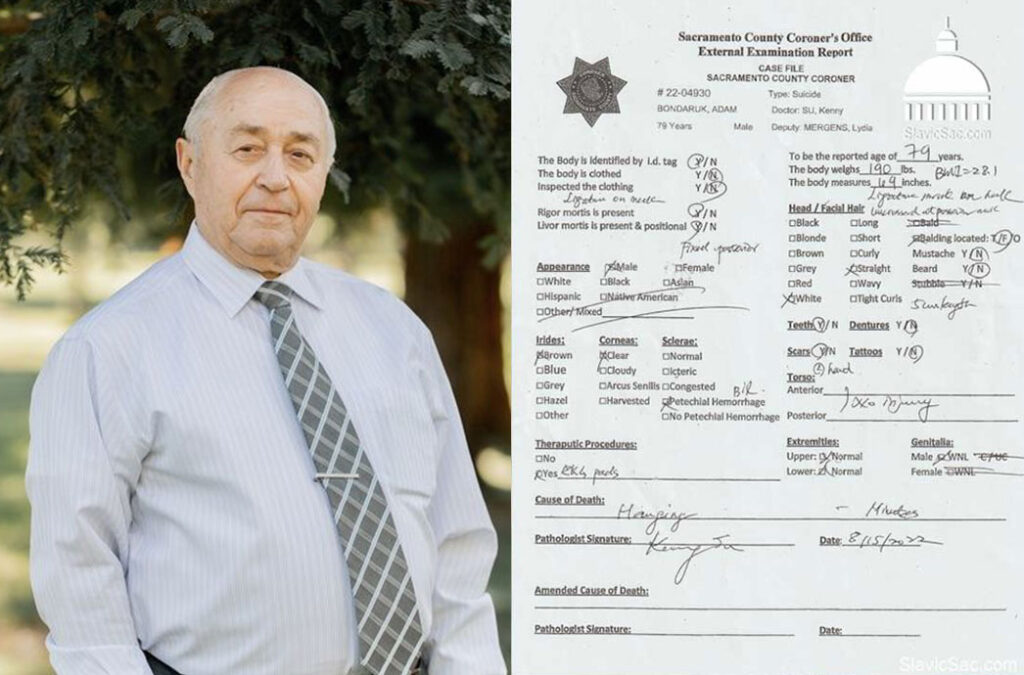
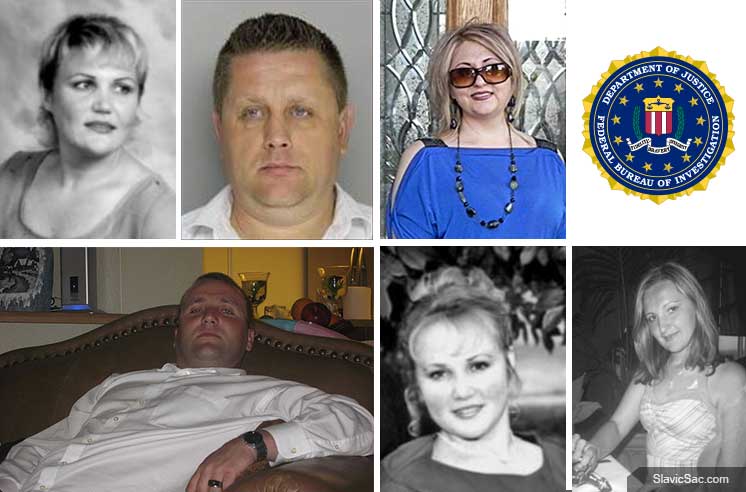
However, it appears that Mokhnenko and other so-called pastors have chosen the convenient position of ignoring the major controversies associated with Bethany. These range from the mass killing of the entire Soltys family, which shocked the United States, and the brutal murders of the Bukhantsev family, to a real estate fraud network involving children of church leaders, scandals involving the family of congregation founder Adam Bondaruk, bishop’s hostile takeovers of other churches, his suicide, and other criminal activities involving members of the organization.
The position taken by self-proclaimed human rights advocates like Mokhnenko is understandable: his work depends almost entirely on Slavic-American churches such as Bethany. Consequently, he and others like him will never challenge the church establishment, even if doing so means siding against an apparent victim.
Pastor Miroshnichenko buried next to Pastor Bondaruk, who died by suicide
Miroshnichenko was ultimately buried at Bethany Church’s official cemetery, called Quiet Haven. However, he was not buried in the privileged section where the remains of Bishop Bondaruk, who died by suicide, lie. Instead, Miroshnichenko was buried in the general area designated for ordinary congregants.
At the same cemetery, managed by the Bethany Slavic Missionary Church, other victims of a criminal religious ideology are buried — the murdered members of the Soltys family, Alina Bukhantsova, and her young children, who remain forever a silent reminder of crimes committed within the church community.
Meanwhile, the child’s mother experienced unprecedented pressure from the religious community in which her family was involved. Paradoxical as it may sound, this is understandable — after all, the church had once again come under criticism, and its already severely tarnished reputation suffered another major blow.