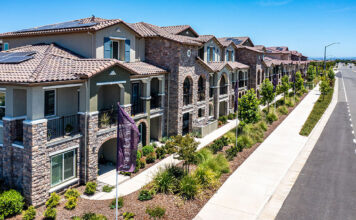
It sounds cliché, but owning a home is truly the American dream for many.
For immigrant families, working-class households, and communities of color across California, not owning a roof over their heads is a daily reality: rising rents, crowded multi-generation family apartments, extreme cold and heat when seasons change, and the painful decision to move far from familiar neighborhoods just to afford a home.
The numbers tell the story. Today, only 22% of California households can afford a median-priced home—a figure that drops to a devastating 11% for Black and Latino families. Meanwhile, more than half of renters spend over 30% of their income on housing (ACoM).
But on November 3, these communities and California voters in general will have a chance to weigh in on three housing-related propositions that take different approaches to solving the persistent housing crisis and putting that American dream within reach.
Propositions 1, 37, and 45 together involve roughly $36 billion in bond authority and a new environmental-review process. They were not written together. Each has a different sponsor, structure, and method of payment. For families trying to understand what is at stake, it helps to take them one at a time, then ask how they relate.
Proposition 1: Subsidies for affordable housing
Proposition 1 is an $11.25 billion state bond, placed on the ballot by the Legislature. Of that, $10 billion would fund housing programs and be repaid from the General Fund, and $1.25 billion would fund veterans’ home loans, repaid by veterans’ mortgage payments, according to the Legislative Analyst’s Office. The largest share, about $7.2 billion, would go to affordable rental housing. The state’s voter guide says the bond would subsidize up to 40,000 rental units, about 2,500 farmworker units, and about 1,200 student beds. Repayment would cost the General Fund $500 million to $600 million a year for about 25 years. Critics argue that borrowing is not a lasting answer to the housing shortage (East Bay Times).
Proposition 37: Help with a down payment
For first-generation immigrants and families of color, the biggest barrier to homeownership isn’t the monthly payment—it’s the lack of generational wealth needed for a down payment.
Supporters see Prop 37 as a bridge across that wealth gap. It would let the California Housing Finance Agency sell up to $25 billion in revenue bonds. The money would fund second mortgages covering up to 17% of the price of a newly built home. Buyers would put down at least 3% and get a first mortgage from a private lender.The bonds would be repaid by borrowers’ payments, not the General Fund, and private lenders, not taxpayers,would bear the default risk (CalMatters). The agency could borrow the full amount but would not be required to, so $25 billion is a ceiling, not a forecast.
Prop 37 is essentially a middle-income program. Borrowers could earn up to twice the area median income and need not be first-time buyers. That’s why critics of this proposition respond that many renters might still not qualify for a first mortgage, that the measure does not lower monthly payments, and that adding buyer money could unintentionally push up prices (NBC Bay Area).
Proposition 45: Speed versus protection
Proposition 45 is not a bond but a rule change, sponsored by the California Chamber of Commerce. It would limit environmental reviews under the California Environmental Quality Act (CEQA) to 365 days for covered projects and tighten deadlines for court challenges. It also reaches beyond housing, to roads, water, and other projects.
For communities of color, this is a hard question. Supporters argue that CEQA lawsuits are sometimes used by well-resourced neighborhoods to block affordable housing, and that Prop 45 would let it be built faster and more cheaply. Critics call it a loophole for developers that could weaken environmental protections—a serious concern for neighborhoods that already bear the brunt of pollution and industrial development (New York Times).
How they relate
Legally, these are standalone measures. Functionally, they are parts of the same supply chain. Prop 1 subsidizes the supply. Prop 37 finances the buyer. Prop 45 controls the speed of the permits.
If Prop 1 passes without Prop 45, subsidized projects could move at today’s pace of review. If Prop 37 passes without new homes being built, more buyer financing could chase the same number of homes, unintentionally boosting prices and making houses even less affordable. How many Prop 1 projects would use Prop 45’s process is not settled.
The questions after Election Day
Whatever voters decide, authorizing money is always hard, but it’s actually the easy part in the context of solving California’s housing crisis and enabling communities of color and immigrants to own a home. Holding the system accountable for equitable access must be part of the execution plan.
For families who have been priced out and local residents facing displacement, the practical questions remain:How can they get qualified? Will outreach reach non-English speakers? And will their qualified homes actually get built?
California’s housing plan calls for more than 2.5 million new homes by 2030, and the Associated General Contractors of America’s 2026 workforce survey found most contractors still struggle to find qualified workers.
Those questions begin on Wednesday. For official information on all three measures, see the state voter guide.
By Julian Travis Do, Co-Director of ACoM
Editor’s Note: This article is an opinion by Julian Travis Do, Co-Director of American Community Media (ACoM) where he focuses on public policy and execution capacity.