Lessons from Vietnam’s Postwar Transformation and Ukraine’s Strategic Pivot
By: Julian Travis Do, Co-Director of American Community Media and Contributing Analyst to SlavicSac
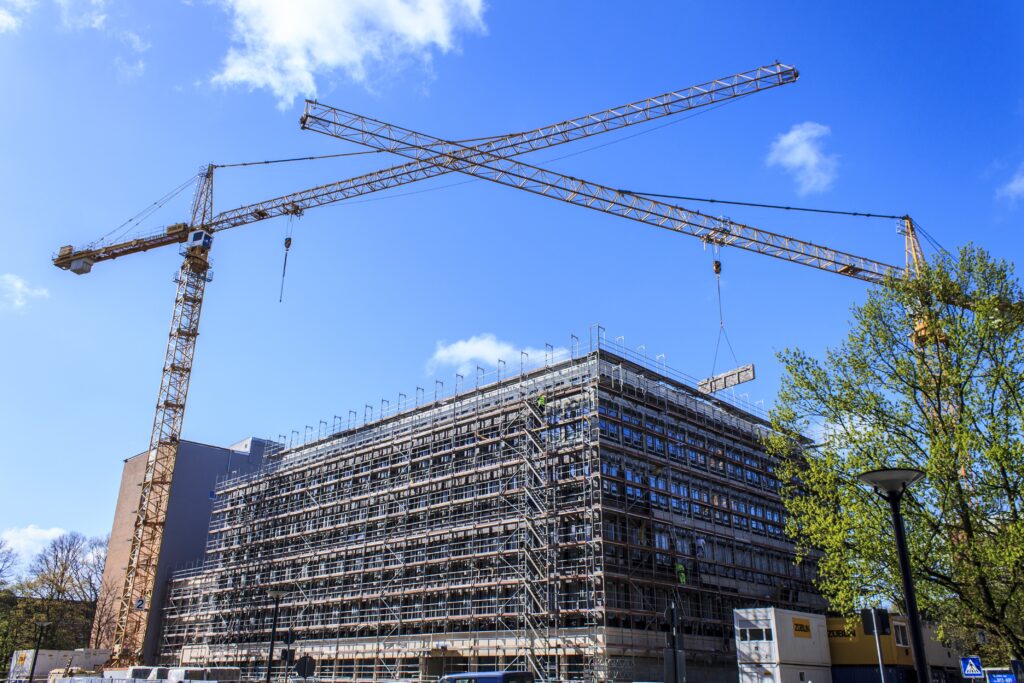
Author’s Note: A nation’s true reconstruction encompasses the entirety of its macroeconomic ecosystem, including its financial markets, education systems, healthcare networks, agricultural production, and defense. This analysis, however, centers on the strategic transformation of physical infrastructure and human capital as the anchor of Ukraine’s economic sovereignty — while necessarily touching on the financing, institutional, and diplomatic mechanisms that determine whether that transformation can actually happen. Upgrading the built environment and the industrial workforce is not merely about addressing immediate wartime gaps; it is the foundational layer upon which Ukraine’s future sovereign economy must be built.
Though halfway across the world from each other with totally different historical origins, Ukraine and Vietnam share a critical modern objective: the desire to build resilient, sovereign, free-market economies out of the ashes of conflict.
Vietnam is now widely considered an economic success, having transitioned from one of the world’s poorest nations to an upper-middle-income economy. Its transformation offers critical lessons for Ukraine, even as the country remains mired in a war of attrition with Russia.
Rebuilding Ukraine: A Shift in Global Consensus
Since the war began in 2022, the international community has convened at dozens of major reconstruction conferences. As delegates prepare for ReBuild Ukraine Construction and Energy in Warsaw this November — the last major conference of 2026 — the underlying premise of that entire conference cycle has decisively shifted.
In July 2022, at the first major recovery conference in Lugano, Switzerland, the dominant framework was still a classic post-disaster model: wait for peace, then rebuild. By 2025 and 2026, that consensus had moved sharply. Delaying recovery, organizers now argue, only compounds structural damage. The current mandate is to support Ukraine’s strategic industries and infrastructure now, using wartime resilience to integrate the country into the European Union’s industrial framework rather than waiting for an uncertain postwar future. That pivot isn’t unanimous; some analysts still argue that pledging billions without a negotiated peace is premature. But it is the operating consensus among the conference organizers and the donor governments that actually make capital investment decisions.
Ukraine’s Reconstruction Priorities
Ukraine is not interested in mere restoration; the country demands modernization. Its reconstruction agenda is driven by six distinct priorities.

Permanent Housing and Social Infrastructure: The top priority is investing in durable housing and human capital for internally displaced persons, anchored by clinics and schools. In Ukrainian reconstruction circles, the phrase “temporary fix” is toxic. However, the objection is not to modular construction itself, but rather to disposable, non-upgradable units with no path to permanence. Ukrainian officials and European architects have pointed to Soviet-era Khrushchevkas as the cautionary tale: housing built as a stopgap that, decades later, is still standing as substandard, permanent stock.
Modernization Over Restoration: Multilateral donors have staked institutional credibility on a “Build Back Better” principle, mandating high energy efficiency and structural modernization. Some Ukrainian officials counter that these ambitious master plans function as investment safeguards that can delay actionable wartime support. It poses a real tension between long-term standards and near-term urgency that any partner should expect to navigate.
Economic Sovereignty Over Aid Dependency: Ukrainians believe true recovery requires generating domestic revenue rather than subsisting on foreign budgetary grants. To achieve this, Ukraine must rebuild an active, tax-generating industrial base while the conflict continues.
Financing Reconstruction Through Russia, Not Just Donors: Ukraine’s leadership has been explicit that reconstruction should draw substantially on Russia’s own frozen sovereign assets — roughly €200 billion held in the West — rather than resting entirely on donor-taxpayer budgets or new debt. This is a live, unresolved question shaping how much capital will actually be available and on what terms.
Mobilizing the Ukrainian Diaspora: Ukraine’s Ministry of Communities, Territories, and Internally Displaced Persons — formally reconstituted by Cabinet Resolution No. 1003 in August 2026 — is pursuing direct “bridges of trust” partnerships between diaspora communities and host regions abroad. The target is at least 100 regional partnerships by 2027 and $500 million raised for community-level projects through direct government-to-government financing.
Importing Production Technology, Not Finished Houses: If technology partners simply ship fully assembled housing units across borders into Ukraine, the country falls into an import trap that bleeds reconstruction capital back out. Poland is the leading candidate for co-located manufacturing precisely because it is already an EU member with an existing industrial base on Ukraine’s border — exactly the kind of integration Ukraine’s own accession process is racing to replicate.
By securing the intellectual property to establish its own advanced manufacturing hubs domestically or with partners like Poland, Ukraine is confident it can convert and integrate its domestic workforce and displaced compatriots into the high-skill human capital this reconstruction requires — e.g., certified engineers and technicians trained in digital-twin modeling, IoT integration, advanced prefabrication, and 3D printing. That training component is not optional: without it, imported technology risks becoming extractive rather than transformative — capability that arrives but never actually transfers to the people meant to inherit it. Strategically, this arrangement would cut logistics overhead and let reconstruction capital circulate within Ukraine and among every nation, agency, and company that joins the rebuilding effort.
That sixth priority — technology transfer over finished-product import — is where Vietnam’s own history becomes directly instructive.
Lessons from Vietnam
The parallel between Vietnam and Ukraine is more structurally relevant than the postwar recoveries of Germany and Japan. In 1945, Germany and Japan were recapitalizing already-functioning market economies with intact property rights and industrial know-how. Vietnam and Ukraine both face a fundamentally harder, dual transition: simultaneously exiting a centralized planning system while recovering from war.
Vietnam’s postwar experience proves peace does not automatically trigger prosperity. Vietnam reunified in 1975, but real, sustained economic development didn’t begin until 1986. Peace, ironically, brought stagnation, not growth, because Vietnam preserved the command economy’s core machinery: collectivized agriculture, state-run industry, and centrally fixed prices. Equipment grew outdated, debt mounted, and corruption metastasized through the bureaucracy for another decade.
The actual turning point came when Soviet aid collapsed in the mid-1980s. Confronted with imminent economic collapse, Vietnamese leaders were forced to accept fundamental market-oriented reforms — a sharp departure from rigid central planning — for the sake of the country’s survival.
From there, Vietnam normalized trade access with the United States, entered the WTO in 2007, adopted an FDI-led manufacturing policy — the same export-zone playbook China’s Shenzhen Special Economic Zone and the East Asian “Tiger” economies had already used to industrialize — and invested heavily in education, a strategy every major industrialized economy, from postwar Germany’s dual apprenticeship system to South Korea’s decades-long human-capital investment, has relied on to build technological capacity. That sequence carried Vietnam from low-income to upper-middle-income status.
But Vietnamese economists now argue that the same model has run its course: FDI-led manufacturing generated weak domestic spillovers, with most value stuck inside foreign-owned firms. Their prescription for the next stage, beyond what Vietnam has already achieved, is a shift from a “1i” model (Investment alone) to a “3i” model: Investment, Infusion of technology, and Innovation.
Mapping the “3i” Roadmap onto Ukraine
Infusion of Technology: Here Ukraine holds an advantage Vietnam never had at a comparable stage: it isn’t waiting for foreign factories to import technology; it’s generating frontier technology domestically, under wartime pressure. Drone manufacturers grew from roughly 7 companies before the invasion to over 500 today, anchoring a defense-technology market estimated at $6.8 billion in 2025. This necessity-driven domestic R&D is a more durable path to indigenous technical capability than Vietnam’s early-stage reliance on foreign-owned assembly plants.
Innovation: Vietnam is only now trying to solve the spillover problem, three decades after its FDI wave began. Ukraine’s wartime tech ecosystem was structured from day one to avoid that trap. The country’s Brave1 defense-tech cluster tightly couples rapid engineering iteration with direct frontline deployment. Foreign investors and defense primes are increasingly seeking direct partnerships with Ukrainian firms rather than simply outsourcing production to them.
In other words, Ukraine isn’t just following Vietnam’s playbook — in the technology and innovation legs of the 3i model, it may already be ahead of where Vietnam is today.
The Structural Gap
The parallel has one critical asymmetry. Ukraine’s 3i progress is concentrated almost entirely in defense and dual-use technology. Autonomous systems and AI are drawing real foreign venture capital, but that capital remains a fraction of the volume a Vietnam-scale FDI wave would require to rebuild civilian infrastructure. Structurally, Ukraine’s civilian economy — housing, utilities, transport, banking, manufacturing outside defense — still has a massive gap to fill. And that gap is exactly where the next wave of investment and partnership needs to land.
A Future Vision for Ukraine
Given Ukraine’s and Vietnam’s shared ambition to build resilient, sovereign free-market economies, the logical path forward is localizing the industrial engine through targeted technology transfer, closing the civilian-sector gap the same way Ukraine filled the defense-tech gap.
In physical infrastructure, that means moving decisively away from both disposable emergency shelters and slow, traditional on-site construction, toward automated, software-driven manufacturing. Ukraine doesn’t need substandard temporary containers; it needs precision-engineered building systems, spanning everything from structural panel components to fully finished modules, designed from the outset to integrate into permanent municipal utility grids rather than sit as stopgap housing for decades.
The real asset worth transferring isn’t the physical panel or module itself. It’s the digital-twin pipeline behind it: the fusion of Building Information Modeling (BIM), Internet of Things (IoT) sensor data, and Manufacturing 4.0’s technology-organization-leadership framework that lets a structure go from design file to finished component in a fraction of the time of site-built construction. That pipeline is what makes the building system replicable at scale, and it’s exactly the kind of IP that can be licensed into a new market without exporting a single finished unit.

That means technology partners — particularly innovation centers like California, where automated, zero-waste off-site fabrication and digital-twin manufacturing have reached industrial scale — should instead license their design software, production data, and factory-automation blueprints to establish localized manufacturing hubs in Ukraine and partner economies like Poland.
Rebuilding cannot simply be an exercise in restoring what was lost. True reconstruction is an act of leapfrogging: transforming the crucible of wartime necessity into an engine of sovereign industrial capability. Instead of waiting for a peace settlement, the technology partners and international development programs that act now will shape the next decade of resilient, smart infrastructure — not just in Ukraine, but globally. That is the conversation Warsaw must start today.
Julian Travis Do is Co-Director of American Community Media, a contributing analyst to SlavicSac, and an entrepreneur. He specializes in private equity, Manufacturing 4.0, and civic media policy.